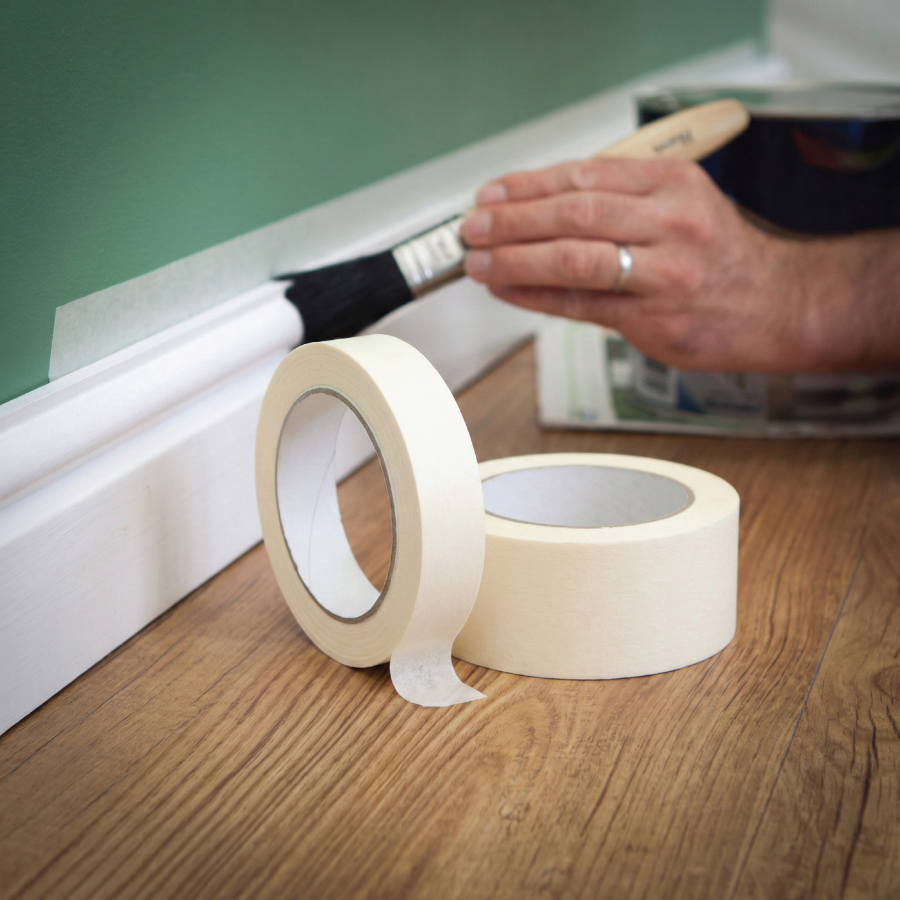
Understand the structure of masking tape from "Backing Material + Adhesive Layer + Special Features" to choose the right type for easy removal, sharp edges, and fewer rework issues.
Choose the Right Tape, Get Smoother Work
Structure affects paint job quality
Backing Material: Crepe paper, plastic, or washi paper affects flexibility and edge sharpness.
Adhesive Layer: Usually natural rubber or acrylic for optimal grip without peeling off paint.
Special Features: Such as heat resistance and clean removal without residue, suitable for continuous painting.
Masking tape isn't one-size-fits-all. Each type is designed for different "edge control" and "clean removal" needs.
Choosing the tape that suits the job makes a clear difference—helping reduce paint bleed, residue, and ensuring consistent sharp edges. Generally, masking tape is divided into 3 main types:
Crepe Paper Tape: General use, easy to use, versatile.
Plastic Masking Tape: Durable, suitable for heavy-duty/wet areas.
Washi Tape: Sharp edges, smooth, ideal for fine details and decoration.
1Crepe Paper Masking Tape
For General Use / Standard Jobs
Good flexibility, adheres well to surfaces, easy to use, and cost-effective.
Easy to remove, reduces chance of residue.
Suitable for DIY and general technician work.
Used for masking/dividing areas before painting.
2Plastic Masking Tape
For Heavy Duty / High Humidity
Plastic structure provides durability and excellent moisture resistance.
More tear-resistant than paper.
Ideal for wet areas/continuous painting.
Controls edges in challenging conditions.
3Washi Tape
For Fine Details / Sharp Edges
Thin tape that adheres tightly, providing smooth and beautiful edge lines.
Sharpest paint edges, minimizes bleed.
Clean removal, no residue left behind.
For models/design work requiring precision.
CREPE MASKING TAPE
Masking TapeCrepe Paper
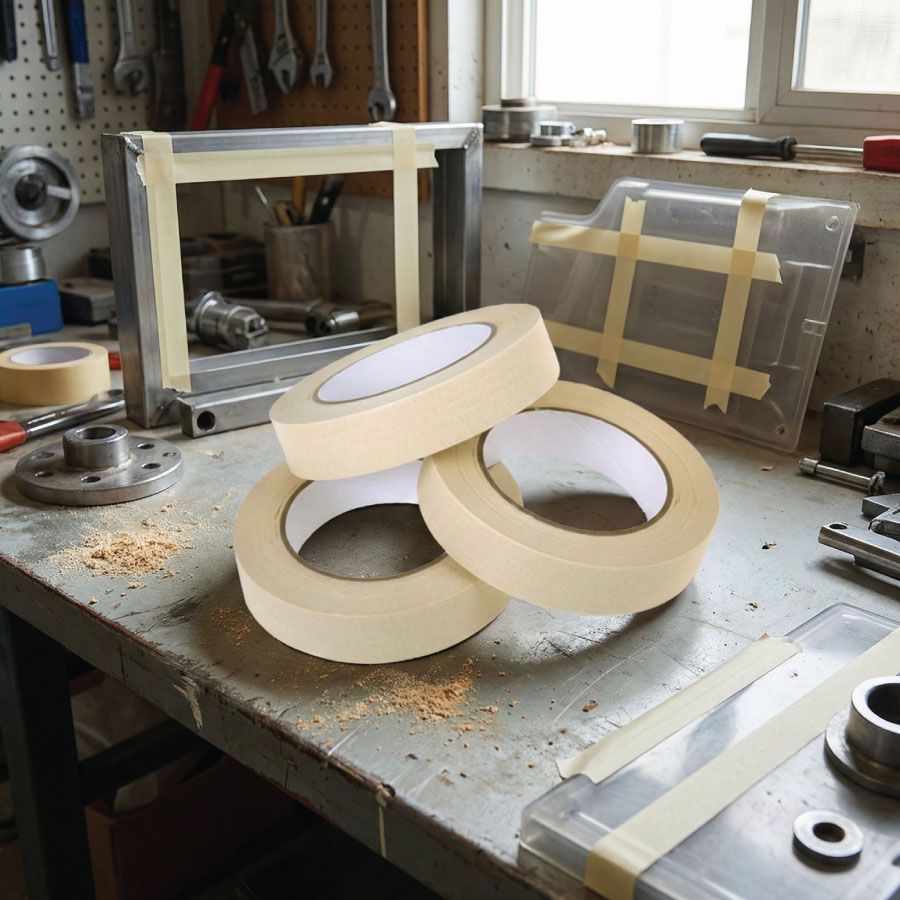
1) Crepe Paper Masking Tape The Standard for Real Paint Jobs
Overview: Crepe paper masking tape is "flexible and conforms well to surfaces," helping control sharp edges, reducing paint bleed under the tape, and removing conveniently after the job. It is suitable for general painting jobs requiring professional neatness.
Highlights: – Crepe paper texture curves well with surfaces/corners, easy to work with, not rigid. – Controls sharp paint edges, reduces chance of bleed under the tape line. – Adheres well, removes easy, suitable for multi-step jobs. – Works on various surfaces like metal, plastic, wood, or walls (depending on surface and paint type).
2) Plastic Masking Tape Resistant to Moisture & Chemicals for On-Site Work
Overview: Masking tape with a Plastic Backing that is stronger than paper tape, hard to tear, provides stable line control, and resists moisture/mist/certain chemicals. It is suitable for continuous work in production lines or on-site environments that are "unfriendly" to paper tape.
Highlights: – Strong plastic backing, tear-resistant, suitable for heavy use and long pulls. – Excellent resistance to moisture and mist, preventing tape disintegration in damp areas. – Consistent line control, suitable for jobs needing speed and tape stability. – Supports on-site/industrial work with exposure to cleaning agents and frequent wiping.
Suitable Applications
Factories / Production lines — Continuous work, stable tape lines.
Painting jobs with humidity — Reduces tape peeling/falling off.
Metal/Plastic parts — Requires durability and tear resistance.
On-site work requiring frequent cleaning — Reduces tape damage.
Key Strengths
Resists moisture/water better than paper tape.
Hard to tear, suitable for heavy use.
Stable control, suitable for urgent work.
Usage Tips
Wipe surface dry and grease-free before sticking.
Press "tape edges" extra tight before painting to prevent bleed.
Remove at a low, consistent angle for smooth edges and less residue.
3) Washi Tape Fine Detail, Sharp Edges, Smooth Finish
Overview: Washi Tape is a masking tape with a "Washi Paper" backing. It is very thin and conforms perfectly to surfaces, reducing gaps that cause paint bleed. It is ideal for jobs requiring sharp edges, detailing, or decorative work needing exceptional neatness.
Highlights: – Thin and smooth tape texture, adheres tightly, significantly reducing bleed under the tape. – Provides beautiful, sharp edge lines, suitable for premium showcase work. – Removes cleanly, reducing risk of residue (when used correctly and not left too long). – Ideal for painting/decorating requiring lines, curves, gradients, or color layering.
Suitable Applications
Paint jobs requiring "very sharp edges" e.g., showcase/decor.
Models/Gundam/Small parts painting needing line definition.
Smooth surfaces like metal, glass, acrylic allow for sharp edges easily, but rough or dusty/greasy surfaces prevent tape from sticking well, causing bleed under the tape. Clean the surface first and choose a tape that "conforms" well; for example, Washi Tape for fine work, or Crepe Paper Tape for general use.
2) Desired Edge Sharpness
If you need "very sharp edges," such as for showcase finishes, lines, or models, choose a thin, conforming tape like Washi Tape. For general painting focused on value and speed, Crepe Paper Tape fits the bill. For stability and durability on-site, Plastic Masking Tape is helpful.
3) Environment: Heat/Humidity/Chemicals
Some paint jobs face baking heat or humidity. In challenging environments, choose tape with heat/moisture/chemical resistance, such as Plastic Masking Tape, to prevent disintegration and breakage, ensuring consistent lines.
4) Adhesion & Dwell Time
If tape stays on for hours or days, choose one that "removes cleanly" and suits the surface. Leaving it too long increases the risk of adhesive residue or peeling paint. Select the tape grade based on actual duration and test on a sample first.
5) Paint Type & Process
Different paints vary in viscosity and flow, e.g., spray paint vs spray gun or paints requiring baking. Choose tape suitable for the process to ensure sharp edges and tape integrity. If painting multiple layers, press tape edges again and remove when paint is semi-set for neatness.
6) Size & Cost Value
Select width to fit the masking area for speed and fewer seams (risk of misalignment). for production or frequent use, focus on roll length and consistent quality, as tape with "sharp edges, clean removal" saves rework costs and time overall.
MASKING TAPE — USE CASES BY INDUSTRY
Use Cases by Industry
Choose masking tape that matches the "actual site" for sharp edges, less rework, and better cost control — Below are real-world applications by industry.
Automotive
Automotive Industry
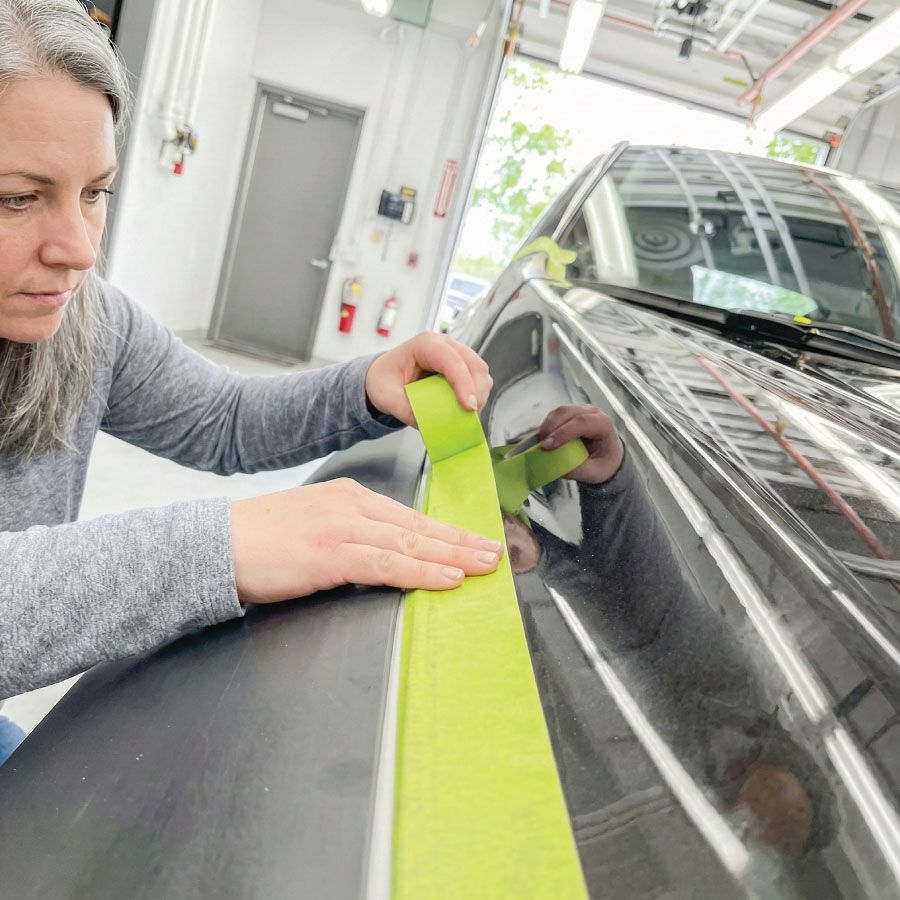
Use Crepe Paper or Washi Tape for sharp edges and to reduce rework after painting.
Production Line
Factories / Production Lines
Choose Plastic Masking Tape for resistance to chemicals, moisture, and continuous use.
Construction
Construction & Building Painting
Crepe Paper Tape facilitates speed, controls costs, and removes easily.
DIY & Decor
Decoration / Furniture / DIY
Washi Tape answers the need for neatness and beautiful surface finishes.
Key Benefits
Advantages of Masking Tape Chosen by Professionals
Whether it's Crepe Paper Tape, Plastic Masking Tape, or Washi Tape, every type is designed to help make painting neat, reduce errors, and save costs in the long run.
Sharp EdgesLess ReworkClean Removal
Sharp Edges, Neat Work
Masking tape defines spray areas clearly, reducing bleed and making the job look neater and more professional.
Easy Removal, No Residue
Adhesive is designed for optimal grip. When finished, it removes cleanly, reducing the risk of peeling paint or leaving residue.
Versatile for Various Levels
From DIY and decoration to industrial work, you can choose the tape type to suit the condition and needs.
Controls Cost and Time
Reduces rework, waste, and speeds up work, resulting in visibly lower total costs for paint jobs.
Tips & FAQs Masking Tape
Which masking tape is best for "sharp edges" and easy removal?
For sharp edges in fine work, we recommend Washi Tape (thin, conforms well). For general painting value, use Crepe Paper Tape. For moist/chemical on-site continuous work, choose Plastic Masking Tape which resists moisture and tearing.
Why does paint "bleed under the tape" and how to fix it?
The main cause is usually dust/grease on the surface or tape edges not pressed tight enough. Fix by cleaning and drying the surface before applying, then use a card/dry cloth to press along the tape edge firmly. Painting in thin layers also helps reduce bleed significantly.
When should I remove the tape for the best edge?
Generally, remove when the paint starts to set (not fully hard) and pull at a low angle slowly along the edge. This helps keep the edge smooth, reduces paint tearing, and lowers the chance of pulling off old paint, especially with fine work using Washi Tape.
What tape for hot/humid/cleaning agent environments?
If the job has high humidity or exposure to water/chemicals, we recommend Plastic Masking Tape because the plastic backing resists moisture and tearing better than paper tape, maintaining the masking line during continuous production or on-site work.
Tips for "tight adhesion" on curves/fine lines?
For curves or fine lines, choose a tape that is thin and flexible like Washi Tape. Apply in short sections, do not stretch too tight, and press edges again with a fingernail/tool, focusing on the edge to be painted. This ensures sharp lines and reduces bleed.
Choose the Right Masking Tape for the Job the First Time
Whether it is Crepe Paper Tape for general painting, Plastic Masking Tape for industrial work requiring moisture/chemical resistance, or Washi Tape for fine work needing sharp edges, choosing the tape that suits the surface, environment, and workflow will reduce rework, save time, and clearly control costs.
3M 2214 Paper Masking Tape is a cost-effective, crepe paper backed tape that holds, bundles, seals and performs other light duty taping jobs where a pressure sensitive tape is needed. This tape tears easily from the roll by hand, sticks confidently, and can be removed conveniently and quickly.
3M 2214 Paper Masking Tape is a cost-effective, crepe paper backed tape that holds, bundles, seals and performs other light duty taping jobs where a pressure sensitive tape is needed. This tape tears easily from the roll by hand, sticks confidently, and can be removed conveniently and quickly.
White paper, firm, durable, easy to tear by hand Do not leave stains when removing the tape Used for bonding paper or other materials General in the industry and offices
3M 2214 Paper Masking Tape is a cost-effective, crepe paper backed tape that holds, bundles, seals and performs other light duty taping jobs where a pressure sensitive tape is needed. This tape tears easily from the roll by hand, sticks confidently, and can be removed conveniently and quickly.
White paper, firm, durable, easy to tear by hand Do not leave stains when removing the tape Used for bonding paper or other materials General in the industry and offices
White paper, firm, durable, easy to tear by hand Do not leave stains when removing the tape Used for bonding paper or other materials General in the industry and offices
Paper masking tape, also known as crepe paper tape, is a white paper tape with a strong adhesive coating. It is removable without leaving residue and can be easily torn by hand. The tape is coated with a strong natural rubber adhesive, providing a tight, durable seal and smooth adhesion. Suitable for various applications, including joining materials, and general-purpose use in industries such as paper bonding, packaging, interior work, automotive painting, and bookbinding. It is also high-temperature resistant.
Crepe paper, good texture, beautiful cream color imported from Canada Coated with natural rubber glue, so strong, firmly attached, durable
Can be used to close various industrial boxes, paint spraying, decorative work, book binding, artificial work or to be written to be overwritten according to various applications
฿75.00 excl tax
Contact Our Sales Team Directly • Check Live Stock • Request a Quote
























-เทปกาวย่นหนังไก่-(Crepe-Paper-Masking-Tape)-1.png)
-เทปบังพ่นพลาสติก-(Plastic-Masking-Tape).png)
-วาชิเทป-(Washi-Tape).png)

_360.jpeg "3M 2214 Paper Masking Tape เทปกาวเนื่อกระดาษ (เทปกระดาษกาวย่น) ขนาด 12mm x 50m")
_360.jpeg "3M 2214 ขนาด 18mm x 25m Paper Masking Tape เทปกาวเนื้อกระดาษ (เทปกระดาษกาวย่น)")
_360.jpeg "3M 2214 ขนาด 18mm x 50m Paper Masking Tape เทปกาวเนื้อกระดาษ (เทปกระดาษกาวย่น)")
_360.jpeg "3M 2214 Paper Masking Tape เทปกาวเนื้อกระดาษ (เทปกระดาษกาวย่น) ขนาด 24mm x 25m")
_360.jpeg "3M 2214 Paper Masking Tape เทปกาวเนื่อกระดาษ (เทปกระดาษกาวย่น) ขนาด 24mm x 50m")
_360.jpeg "3M 2214 Paper Masking Tape เทปกาวเนื่อกระดาษ (เทปกระดาษกาวย่น) ขนาด 36mm x 25m")
_360.jpeg "3M 2214 Paper Masking Tape เทปกาวเนื่อกระดาษ (เทปกระดาษกาวย่น) ขนาด 36mm x 50m")
_360.jpeg "3M 2214 ขนาด 48mm x 25m Paper Masking Tape เทปกาวเนื้อกระดาษ (เทปกระดาษกาวย่น)")
_360.jpeg "3M 2214 ขนาด 48mm x 50m Paper Masking Tape เทปกาวเนื่อกระดาษ (เทปกระดาษกาวย่น)")
_360.jpeg "3M 2214 Paper Masking Tape เทปกาวเนื้อกระดาษ (เทปกระดาษกาวย่น) ขนาด 72mm x 50M")

-เทปกาวเนื้อกระดาษ-เทปกระดาษกาวย่น_360.jpeg "CM 35 Crepe Paper Tape(Masking Tape) เทปกาวเนื้อกระดาษ เทปกระดาษกาวย่น")

 LINE @wetapestore Check stock / product inquiry
  Chat with Staff Live chat during business hours
  Request a Quote Send details for pricing
  Call Direct sales hotline