




















Industrial tapes adhesive
WETAPE
Industrial Adhesive Tape
Learn all about industrial adhesive tapes in one place. From how they differ from regular tapes, types, and real-world applications, to how to choose the right specs for your job.





How Does Industrial Tape
Differ From Regular Tape?
Industrial tapes are designed for manufacturing and assembly. They can withstand high loads, heat, and chemicals, replacing welding, nuts, or screws in many applications, helping reduce steps and speed up production.
A high-performance bonding material that combines engineering-grade adhesives with durable backing materials, used in manufacturing, assembly, and maintenance.
Regular tapes are for paper and light duties, while industrial tapes can withstand temperatures over 100°C, resist chemicals, and handle much higher tensile strength.
Reduces production costs, lowers workpiece weight, eliminates the need for drilling, and reduces rust problems often caused by screw holes or welds.
How Many Types of Industrial Tape Are There?
Divided into 6 main groups based on structure and application. Choose the right type for the job before selecting the specific model and size.
Why Do Factories Worldwide
Choose Adhesive Tapes?
Because they solve engineering challenges where welding or screwing falls short—in terms of weight, neatness, and production time.
High Load Capacity
Engineering-grade adhesives can support large components and maintain long-term bonding strength, even under heavy duty.
Job-Specific Choices
Available in foam, paper, film, cloth, and metal cores. Choose properties that match the job without relying on a single tape for everything.
Verifiable Brands
Products from brands like 3M, Nitto, and Tesa provide Technical Data Sheets (TDS) to verify specs for every model.
Neater Finish
No welds, no screw heads. Smooth surfaces, waterproof sealing of joints, and reduced rust issues from drilling.
What Can Each Type Be Used For?
Click the cards to see real-world application examples, then compare them with your specific task.
3M VHB
View Application Examples +
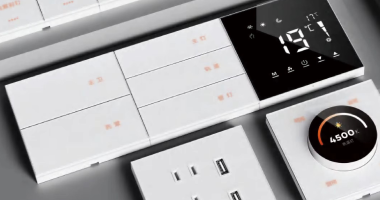
- Bonding aluminum panels and glass curtain walls / cladding instead of riveting
- Assembling letter signs, light boxes, and billboards for a smooth, screwless surface
- Attaching stiffeners in electrical cabinets, elevators, and appliance panels
- Attaching trims, decorative parts, and body panels on buses and trucks
Tissue Tape
View Application Examples +
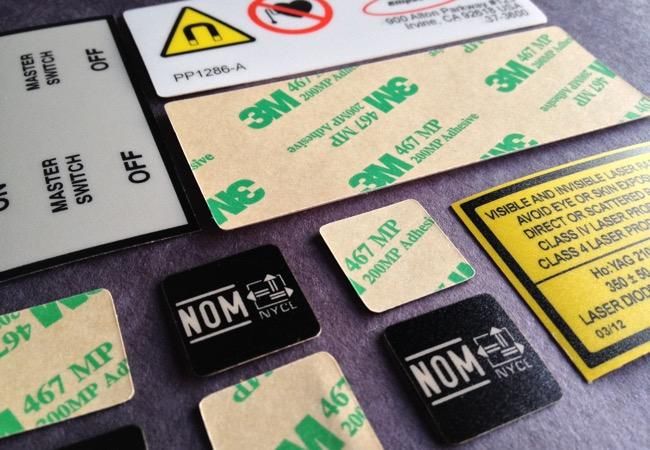
- Attaching displays, touch panels, and membrane switches
- Custom die-cutting for assembling precise small components
- Attaching nameplates, labels, and decorative plates on machines
- Laminating foam, sponge, or cloth to create adhesive-backed parts
Protective Tape
View Application Examples +
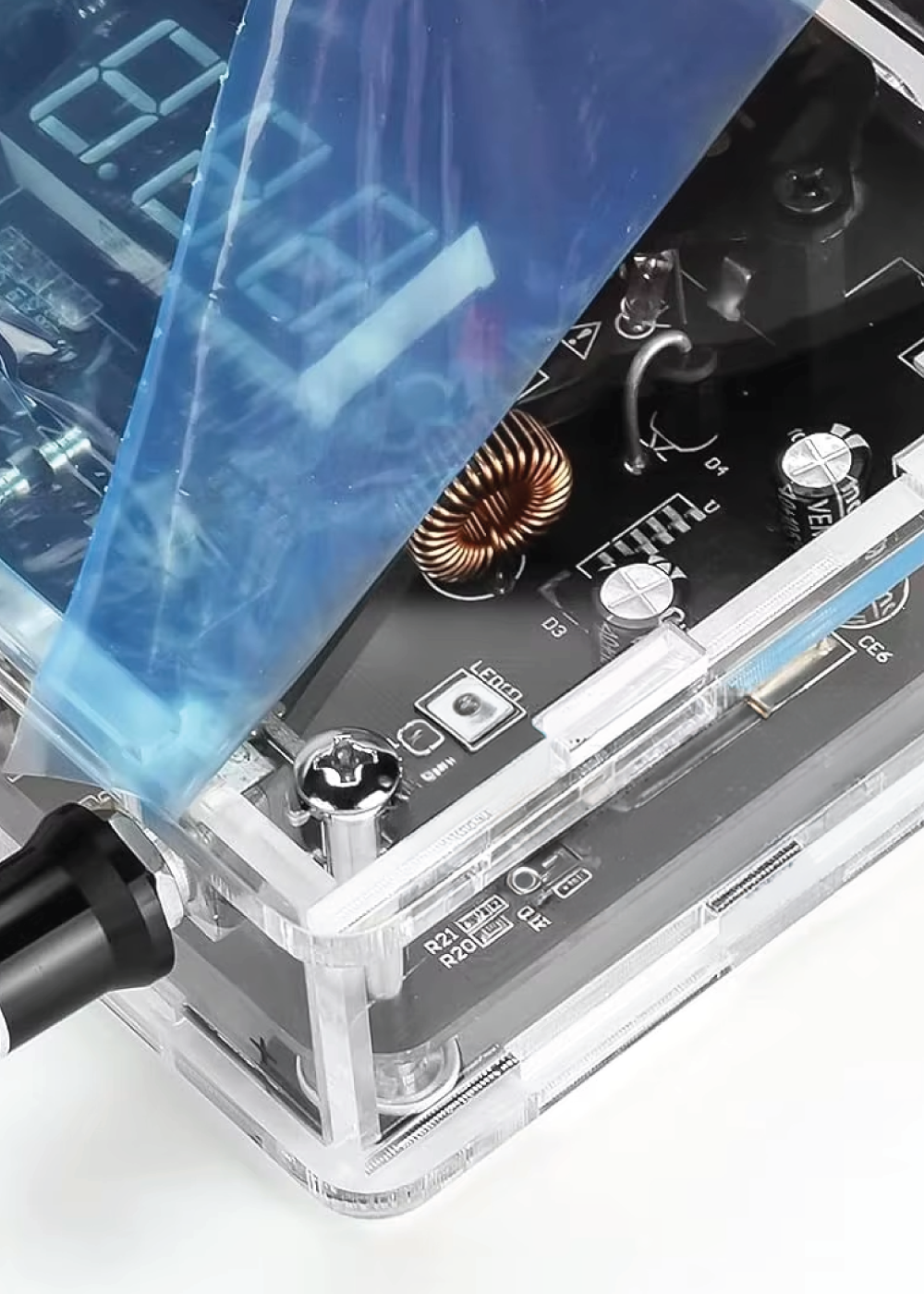
- Protecting stainless steel and aluminum surfaces during cutting, folding, and forming
- Protecting glass, acrylic, and polycarbonate during transport and installation
- Preventing scratches on auto parts during assembly and moving
- Masking window frames, doors, and appliance fronts before delivery
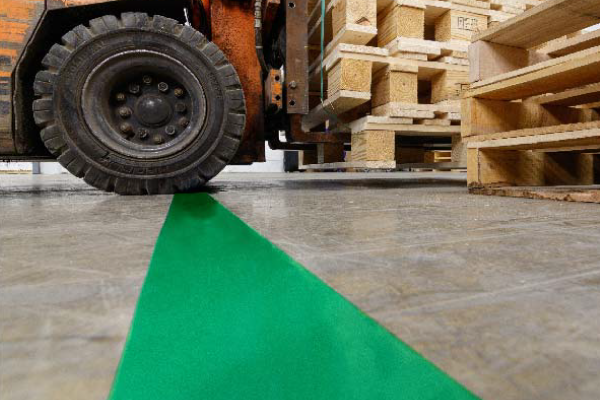
Industrial Floor Marking Tape
View Application Examples +
- Separating pedestrian walkways from forklift paths
- Designating spots for pallets, raw materials, and outgoing goods
- Marking hazardous zones, electrical panels, and fire extinguisher locations
- Zoning workspaces according to the 5S system for visual inspection
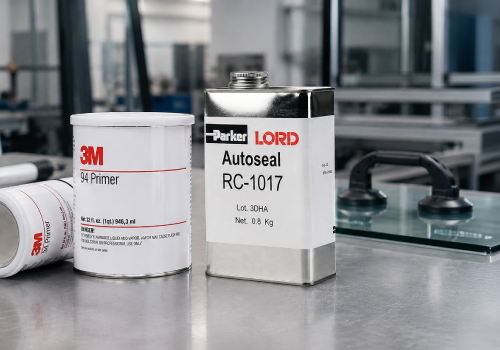
Primer / Adhesion Promoter
View Application Examples +
- Preparing hard-to-bond plastic surfaces like PP and PE before taping
- Improving adhesion on powder-coated and coated surfaces
- Used with VHB tape for attaching car parts and rubber trims
- Helping tapes adhere better to porous surfaces like wood and concrete
/MT-PET60-CLEAR-งานฉนวนไฟฟ้าบนแผงวงจร.png)
Foil and Insulation Tape
View Application Examples +
- Polyimide masking PCB pins during soldering and reflow baking
- Polyester wrapping for transformer coils, motors, and coils
- Copper / aluminum foil for EMI shielding in equipment cases and signal cables
- Grounding for ESD protection and repairing air duct leaks
How to Choose the Right Tape Specifications?
The best tape is the one that fits the job, not the most expensive one. Answer these 5 questions in order, and you will know which tape to use.
What surface are you bonding to?
Different materials have different Surface Energies. The lower the energy, the harder it is to bond. Check both surfaces to be joined.
How much load must it handle?
Consider weight, vibration, and force direction (shear, tensile, peel). The higher the force, the thicker and more flexible the tape needs to be.
Heavy parts, vibrations, requiring permanent bonding throughout the product's lifespan.
Small, lightweight parts requiring thin tapes that do not add thickness.
What is the working environment?
Use the maximum temperature the part will actually face as a baseline, not the average. Also consider sun, rain, moisture, and chemicals.
Use non-shrinking, non-melting films when exposed to heat.
Use UV and water-resistant acrylic adhesives that won't degrade over time.
Is the surface smooth or rough?
Tape thickness must match the surface. Tape that is too thin will not make full contact on rough surfaces, drastically reducing bond strength.
Or if materials expand at different rates. Use thick, flexible foam tapes to fill gaps.
Use thin double-sided tapes for a flush fit that meets design dimensions.
Permanent or Removable?
This instantly points to the adhesive type. Permanent adhesives are hard to remove and leave residue. Removable adhesives aren't suited for long-term load bearing.
Use acrylic adhesives, which bond stronger over time and resist chemicals well.
Use protective tapes or silicone tapes for temporary surface masking.
*Bond strength, temperature range, and durability vary by model and manufacturer. Always check the Technical Data Sheet (TDS) of the specific model before actual use.
Still can't decide? Send us these 5 details
Our team will help select the right model for your job and advise on installation.
Frequently Asked Questions
Common questions from factory clients and contractors regarding the selection, installation, and use of industrial tapes.
Can't find your question?
Send us your material and job details. Our team will answer and recommend the right tape.
Can adhesive tape really replace nuts, rivets, or welding? +
Yes, in many applications like curtain walls, billboards, and vehicle body panels. Tape distributes stress across the entire bonded area, unlike nuts or rivets which concentrate stress at a single point. This eliminates stress points and the need for drilling.
However, you must choose a model that matches the material, weight, and environment, and use enough tape area. For safety-critical applications, such as high-rise building facades or parts hanging above walkways, a responsible engineer should evaluate and test on actual workpieces before use.
How should surfaces be prepared before applying tape? +
Clean surfaces to be free of dust and oil. Generally, use Isopropyl Alcohol (IPA) mixed with water, and let it dry completely.
For hard-to-bond surfaces like PP, PE plastics, or powder coats, you should apply primer first. After applying, press firmly across the entire piece and avoid applying in freezing environments.
How long should I wait after applying for the tape to reach full strength? +
For acrylic foam tapes like 3M VHB, manufacturer data indicates that at room temperature, bond strength is about 50% after 20 minutes, 90% after 24 hours, and 100% after 72 hours.
Therefore, you should not subject the workpiece to full weight or impact immediately after applying. Other tape types may have different cure times; always check the TDS for that specific model.
How do I choose the right tape for my job? +
Consider 5 factors: surface material, required load capacity, environment, surface smoothness, and whether it's permanent or removable. See details for each in the How to Choose section.
If unsure, send information and photos of your job site to our team for a recommendation.
Can industrial tapes be used outdoors? +
Yes, but you must choose the right adhesive type. Acrylic adhesives resist UV, moisture, and fluctuating temperatures well, making them ideal for outdoor and long-term use.
Rubber adhesives, however, bond quickly and strongly initially but are better suited for indoor use because they degrade faster when exposed to sun and heat.
Will the tape leave a residue when removed? +
It depends on the tape type. Protective tapes and masking tapes are designed for clean removal within a timeframe specified by the manufacturer. However, if left too long or exposed to intense sun and heat, they might leave residue.
Permanent bonding tapes like VHB are not designed to be removed. You should choose based on your needs from the start.
Can I order custom tape sizes or die-cuts? +
Yes, we offer slitting services for specific widths and custom die-cutting to your drawing. This is ideal for production lines needing many identical tape pieces. Send your design or actual sizes to our team for evaluation.
How should I store adhesive tapes to maximize shelf life? +
Store in original packaging at room temperature, away from direct sunlight, heat, and moisture. Place rolls horizontally or hang them so the edges don't deform, and use them within the manufacturer's specified shelf life.
Compiled by the WeTapeStore Tape Consulting Team
Content is based on consulting experience with factory clients and contractors, and cross-referenced with manufacturers' Technical Data Sheets.
Last Updated: September 2026
Technical Data Sheets (TDS) from manufacturers such as 3M, Tesa, Nitto, and Soken
Installation and surface preparation guides from manufacturers for specific models
Safety Disclaimer: Information on this page serves as a general guide. Actual values depend on the tape model, materials, and installation. Bonding applications related to building structures, vehicles, or personal safety should be verified against TDS, tested on actual workpieces, and certified by a responsible engineer before use.

 LINE @wetapestore Check stock / product inquiry
  Chat with Staff Live chat during business hours
  Request a Quote Send details for pricing
  Call Direct sales hotline