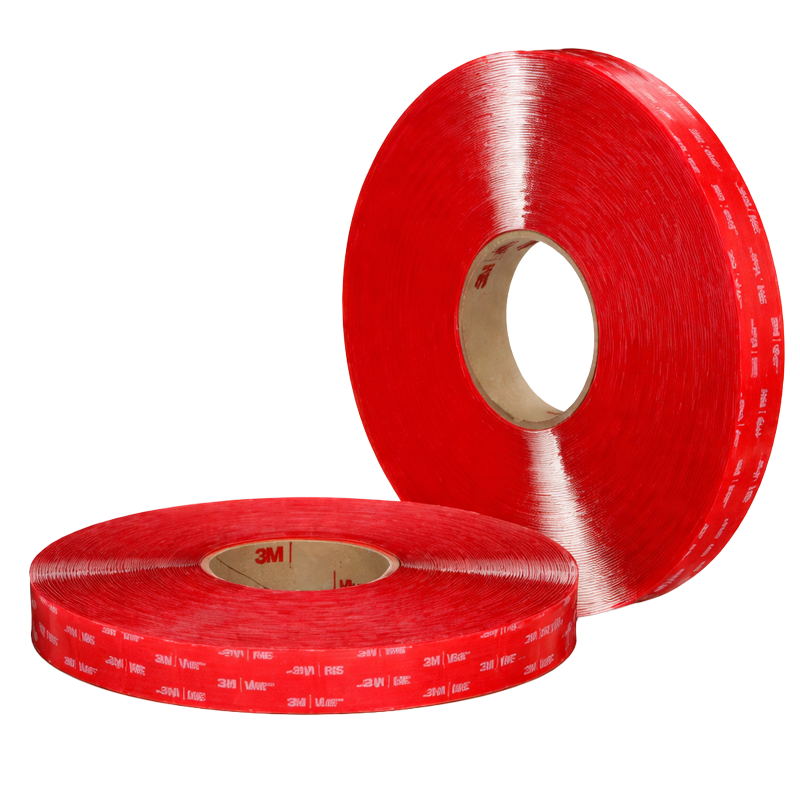
Clear Acrylic 1.0 mm
3M VHB 4910 Double-Sided Clear Tape
3M™ VHB™ Tape 4910 Clear Structural Bonding
PART NO. 4910
You have no items in your shopping cart.

Transparent Structural Bonding Technology
Clear acrylic adhesive tape that bonds glass, acrylic, and metal with structural strength, leaving no visible screws or adhesive residue.
Series Thicknesses
0.2 mm and 1.0 mm
Adhesive Material
Solid Clear Acrylic
Outdoor Use
UV resistant, non-yellowing
Services
Custom slitting & die-cutting
Quick Selection
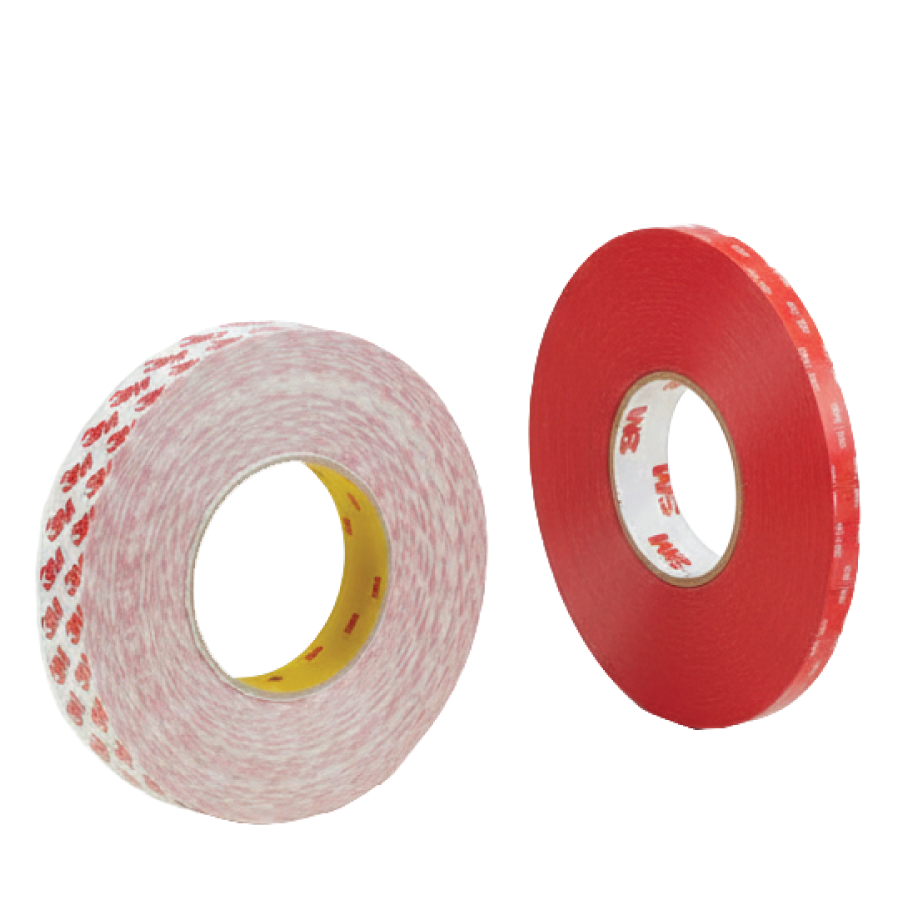
Both models use the same adhesive material. The difference is the thickness, which should be selected based on the surface material and component size.
Perfectly smooth on both sides, small components, requiring the thinnest possible bond line.
Use VHB 020F (0.2 mm)If your application is:Glass, acrylic, large panels, or dissimilar materials with different expansion rates.
Use VHB 4910 (1.0 mm)Still unsure? Read our detailed thickness selection guide, or send a photo of your workpiece to our technical team via LINE.
Products
Order directly via LINE. Our team will confirm stock, pricing, and roll sizes in the chat.

Clear Acrylic 1.0 mm
3M™ VHB™ Tape 4910 Clear Structural Bonding
PART NO. 4910

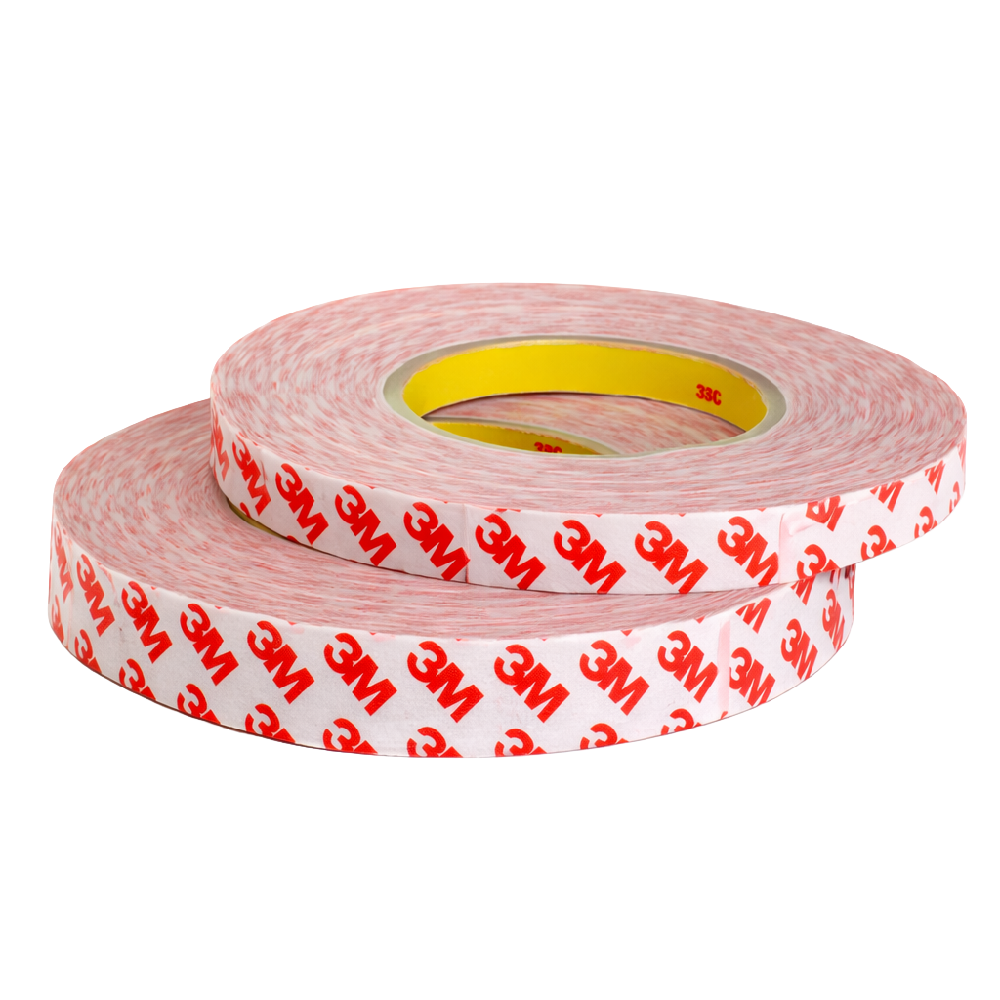
Clear Acrylic 0.2 mm
3M™ VHB™ Tape 020F Ultra Thin Flush Bonding
PART NO. 020F
Thickness and properties refer to 3M Technical Data Sheets by part number. For strip or die-cut requests, use our custom tape cutting service
Why VHB Clear?
The tape consists of a solid clear acrylic core with no carrier, allowing it to bear loads through its entire thickness while maintaining the complete transparency of the materials.

Clear bond line, no drilling
No visible screw heads, ensuring a clean and sleek design.
Non-yellowing under sunlight
Adhesive remains clear even with continuous UV exposure.
Absorbs shock and expansion
Viscoelastic core flexes with materials during temperature changes.
Seals against water and air
Bonds and seals joints in a single step.
Distributes stress evenly
No concentrated stress points, reducing the risk of glass cracking.
Strong bond on high surface energy materials
Glass, acrylic, stainless steel, aluminum.
Application Examples
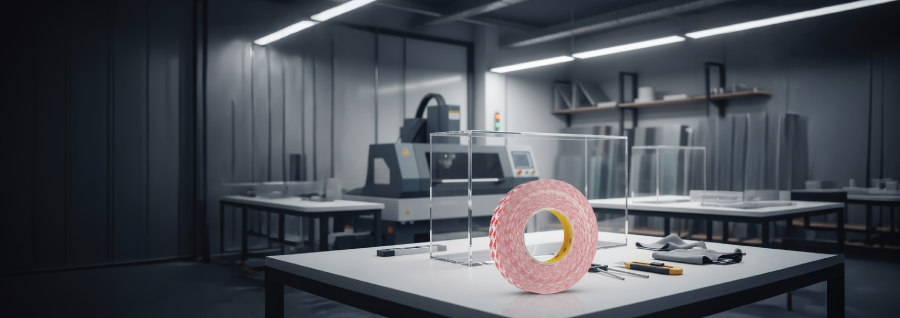
Bonds clear acrylic and glass without adhesive residue. Shelves look premium and seamless.
Bonds glass partition panels, accommodates thermal expansion, and seals against water, replacing mechanical fasteners.
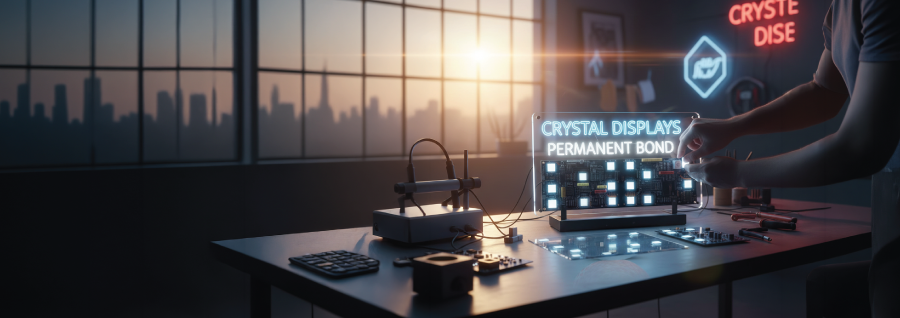
Bonds control panels and LED signs. Transparency does not block light, withstands accumulated heat.
Thickness Selection Guide
Thickness does not indicate high or low bond strength; instead, it determines how well the tape will fully contact the material surface and how much material movement it can accommodate. These two factors are the main reasons why glass and acrylic bonding fails.
Bond strength comes from the actual area where the adhesive touches the surface. Surfaces that look smooth to the naked eye still have microscopic curves, warps, or waves. A thin tape will only touch the high points and leave air gaps in the low points. A thicker tape has enough viscoelastic mass to flow into and fill these gaps, thus providing a larger actual bonding area.
0.2 mm tape on an irregular surface
Adhesive touches only high points, reducing actual load-bearing area.
1.0 mm tape on an irregular surface
Tape flows into low points, contacting almost the entire surface.
Top material Tape core Air gap Bottom material surface
When temperatures change, dissimilar materials expand and contract at different rates. The differential movement (ΔL) becomes shear stress in the tape layer. Shear strain is calculated by ΔL ÷ Tape Thickness. For the same ΔL, a thicker tape results in lower strain in the adhesive core.
Calculation Example
A 1 m aluminum panel bonded to glass, temperature change of 40°C
Coefficient of thermal expansion: Aluminum approx. 23×10⁻⁶/°C, Glass approx. 9×10⁻⁶/°C
ΔL ≈ (23 − 9)×10⁻⁶ × 1,000 mm × 40°C ≈ 0.56 mm
On 0.2 mm tape, shear strain is approx. 280%. On 1.0 mm tape, it is approx. 56%.
0.2 mm tape when material shifts by ΔL
Thin tape layer must skew significantly, resulting in high strain.
1.0 mm tape when material shifts by the same ΔL
Thick tape layer distributes the skew, resulting in approx. 5 times lower strain.
Diagram scales are exaggerated for illustration. Numbers are sample calculations. Actual designs should refer to 3M Technical Data Sheets and consult engineers.
| Criteria | VHB 020F 0.2 mm | VHB 4910 1.0 mm |
|---|---|---|
| Surface Texture | Perfectly smooth, flat on both sides | Smooth, up to slight curves or waves |
| Bonding Materials | Similar materials, or similar expansion rates | Dissimilar materials, e.g., glass and aluminum |
| Component Size | Small parts, short bond lines | Large panels, long bond lines |
| Bond Line Profile | Virtually no gap between parts | 1 mm gap, visible as a thin clear line |
| Example Applications | Keypads, nameplates, touch screens | Display cases, acrylic signs, glass doors |
Overhead glass installations, large outdoor signs, or Structural Glazing require engineering design and bond strength testing prior to use, along with standard secondary mechanical fasteners. Glass applications exposed to continuous moisture should use an adhesion promoter (Primer) as recommended by the manufacturer. Request TDS and test samples
Based on 3M VHB tape installation guidelines. Most bonding failures are due to improper surface preparation and pressure.
The main difference is thickness. 4910 is 1.0 mm thick, compensating for irregular surfaces and accommodating dissimilar material expansion well; ideal for glass, acrylic, and signage. 020F is 0.2 mm thick, suitable for flat surfaces requiring a thin, flush bond line like keypads and nameplates.
Yes. The acrylic adhesive is highly resistant to UV and weather, preventing yellowing or cracking over long-term use. For large outdoor architectural projects, design the bond line to avoid water pooling and consult our technical team prior to installation.
Not recommended. Bond strength drops significantly once removed. You should clean the surface and use a new piece of tape every time to ensure specified strength.
PP and PE are low surface energy plastics. The Clear series will not bond optimally without an adhesion promoter (Primer). We recommend sending your material details to our technical team for assistance in selecting a better model.
Yes, we offer tape slitting and die-cutting services to your desired dimensions. This minimizes waste and speeds up on-site installation.

Transparent Structural Bonding Technology
Clear acrylic adhesive tape that bonds glass, acrylic, and metal with structural strength, leaving no visible screws or adhesive residue.
Series Thicknesses
0.2 mm and 1.0 mm
Adhesive Material
Solid Clear Acrylic
Outdoor Use
UV resistant, non-yellowing
Services
Custom slitting & die-cutting
Quick Selection
Both models use the same adhesive material. The difference is the thickness, which should be selected based on the surface material and component size.
Perfectly smooth on both sides, small components, requiring the thinnest possible bond line.
Use VHB 020F (0.2 mm)If your application is:Glass, acrylic, large panels, or dissimilar materials with different expansion rates.
Use VHB 4910 (1.0 mm)Still unsure? Read our detailed thickness selection guide, or send a photo of your workpiece to our technical team via LINE.
Products
Order directly via LINE. Our team will confirm stock, pricing, and roll sizes in the chat.

Clear Acrylic 1.0 mm
3M™ VHB™ Tape 4910 Clear Structural Bonding
PART NO. 4910

Clear Acrylic 0.2 mm
3M™ VHB™ Tape 020F Ultra Thin Flush Bonding
PART NO. 020F
Thickness and properties refer to 3M Technical Data Sheets by part number. For strip or die-cut requests, use our custom tape cutting service
Why VHB Clear?
The tape consists of a solid clear acrylic core with no carrier, allowing it to bear loads through its entire thickness while maintaining the complete transparency of the materials.

Clear bond line, no drilling
No visible screw heads, ensuring a clean and sleek design.
Non-yellowing under sunlight
Adhesive remains clear even with continuous UV exposure.
Absorbs shock and expansion
Viscoelastic core flexes with materials during temperature changes.
Seals against water and air
Bonds and seals joints in a single step.
Distributes stress evenly
No concentrated stress points, reducing the risk of glass cracking.
Strong bond on high surface energy materials
Glass, acrylic, stainless steel, aluminum.
Application Examples
Bonds clear acrylic and glass without adhesive residue. Shelves look premium and seamless.
Bonds glass partition panels, accommodates thermal expansion, and seals against water, replacing mechanical fasteners.
Bonds control panels and LED signs. Transparency does not block light, withstands accumulated heat.
Thickness Selection Guide
Thickness does not indicate high or low bond strength; instead, it determines how well the tape will fully contact the material surface and how much material movement it can accommodate. These two factors are the main reasons why glass and acrylic bonding fails.
Bond strength comes from the actual area where the adhesive touches the surface. Surfaces that look smooth to the naked eye still have microscopic curves, warps, or waves. A thin tape will only touch the high points and leave air gaps in the low points. A thicker tape has enough viscoelastic mass to flow into and fill these gaps, thus providing a larger actual bonding area.
0.2 mm tape on an irregular surface
Adhesive touches only high points, reducing actual load-bearing area.
1.0 mm tape on an irregular surface
Tape flows into low points, contacting almost the entire surface.
Top material Tape core Air gap Bottom material surface
When temperatures change, dissimilar materials expand and contract at different rates. The differential movement (ΔL) becomes shear stress in the tape layer. Shear strain is calculated by ΔL ÷ Tape Thickness. For the same ΔL, a thicker tape results in lower strain in the adhesive core.
Calculation Example
A 1 m aluminum panel bonded to glass, temperature change of 40°C
Coefficient of thermal expansion: Aluminum approx. 23×10⁻⁶/°C, Glass approx. 9×10⁻⁶/°C
ΔL ≈ (23 − 9)×10⁻⁶ × 1,000 mm × 40°C ≈ 0.56 mm
On 0.2 mm tape, shear strain is approx. 280%. On 1.0 mm tape, it is approx. 56%.
0.2 mm tape when material shifts by ΔL
Thin tape layer must skew significantly, resulting in high strain.
1.0 mm tape when material shifts by the same ΔL
Thick tape layer distributes the skew, resulting in approx. 5 times lower strain.
Diagram scales are exaggerated for illustration. Numbers are sample calculations. Actual designs should refer to 3M Technical Data Sheets and consult engineers.
| Criteria | VHB 020F 0.2 mm | VHB 4910 1.0 mm |
|---|---|---|
| Surface Texture | Perfectly smooth, flat on both sides | Smooth, up to slight curves or waves |
| Bonding Materials | Similar materials, or similar expansion rates | Dissimilar materials, e.g., glass and aluminum |
| Component Size | Small parts, short bond lines | Large panels, long bond lines |
| Bond Line Profile | Virtually no gap between parts | 1 mm gap, visible as a thin clear line |
| Example Applications | Keypads, nameplates, touch screens | Display cases, acrylic signs, glass doors |
Overhead glass installations, large outdoor signs, or Structural Glazing require engineering design and bond strength testing prior to use, along with standard secondary mechanical fasteners. Glass applications exposed to continuous moisture should use an adhesion promoter (Primer) as recommended by the manufacturer. Request TDS and test samples
Based on 3M VHB tape installation guidelines. Most bonding failures are due to improper surface preparation and pressure.
The main difference is thickness. 4910 is 1.0 mm thick, compensating for irregular surfaces and accommodating dissimilar material expansion well; ideal for glass, acrylic, and signage. 020F is 0.2 mm thick, suitable for flat surfaces requiring a thin, flush bond line like keypads and nameplates.
Yes. The acrylic adhesive is highly resistant to UV and weather, preventing yellowing or cracking over long-term use. For large outdoor architectural projects, design the bond line to avoid water pooling and consult our technical team prior to installation.
Not recommended. Bond strength drops significantly once removed. You should clean the surface and use a new piece of tape every time to ensure specified strength.

PP and PE are low surface energy plastics. The Clear series will not bond optimally without an adhesion promoter (Primer). We recommend sending your material details to our technical team for assistance in selecting a better model.
Yes, we offer tape slitting and die-cutting services to your desired dimensions. This minimizes waste and speeds up on-site installation.